
Get better performance with a 2 stage COBOL compile process in a DevOps model
We’ve been working with a number of customers who have used legacy mainframe SCM’s over the years migrate to Git...
TLDR; You migrated your code into a git repository in Unix using the wrong code page, and/or forgot to update...
As IBM Developer for zOS gains more features and updates, performance becomes more of an issue, especially for developers with...
When moving from Endevor to Git with IBM Dependency Based Build, it’s a good time to reevaluate your dataset locations...
This is a common question we get. Many desktops or VM’s start with a default of 8GB of memory installed...
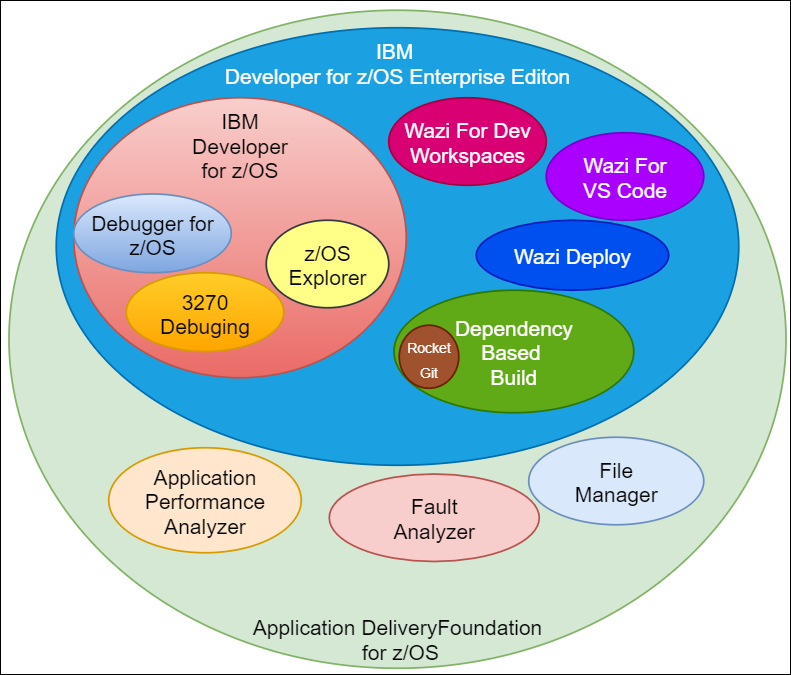
So, you’ve been told your company bought “IDz”, but when asked what package was bought, you get shrugs. Well, here...
IBM Engineering Lifecycle Management is a suite of tools that includes the following: The tips below will apply to nearly...
With IDz 15 and 16 we previously posted about using the P2 installation. This method makes rollout a breeze. If...
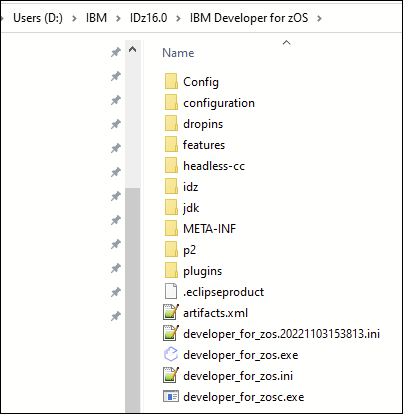
IBM Installation Manager has been the workhorse for managing the installation of many IBM desktop tools including IBM Developer for...
When uploadding to an IBM zD&T system, you may experience painfully slow upload times. I’ve had 5MB files take 30...
Find out how our solutions can help you answer this question.
Listen as several IBM product experts discuss how devops impacts business.
IBM DevOps solutions offer an integrated, unified and comprehensive set of capabilities that is essential to the modernization of mainframe development & delivery practices. It accelerates the pace of innovation for enterprise organizations while ensuring the stability of core business systems

Identify the requirements that are the absolute minimum to allow the product, feature, or subsystem to function for the major stakeholder needs. Focus on delivering only those requirements in early iterations, and non-critical features in subsequent iterations.

Ensure developers, architects, stakeholders and managers are dedicated to delivery of the product. Enable them to do their job or task without interruption, and trust their judgement to do what’s right.

Frequent smaller delivery helps to keep the stakeholder engaged and the development team informed of changes in the business climate. The efficiency of working in small batches is one reason why adopting agile development has benefited the software industry.

A handoff occurs when one team member hands off a piece of work to another (for example, a developer fixes a defect and hands it off to the tester to verify the fix). Flow is the process by which a team member can complete a task, and that the system can move through the development cycle from ideation to production.

The idea that working in small batches is a far more efficient than working in large batches is nothing new. The efficiency of working in small batches is one reason why adopting agile development has benefited the software industry. In the days of waterfall development, months of coding were followed by months of testing, and only near the end of the testing phase did anything really work.

Good communication improves the collaboration level between teams. High levels of transparency significantly reduces the costs and waste through the app delivery. The risk of using many different tools will be the problems integrating them. Solving those problems create noise and need to be one of the most important features of a DevOps toolchain orchestration solution.

Find process steps that add little to no value to the business and remove them. Look at complex approval cycles, and manual steps. Enable team members to make non-critical decisions. Identify communications barriers, and zealously remove them.

Automated testing can quickly identify regression errors quickly. Tests should be automated at the unit, API, and user interface layers, and run before every deployment. Manual deployment steps are error prone, and time consuming. Automated deployments are repeatable, predictable, and auditable (and reduce the team’s anxiety at deployment time).
Want to know more about how these concepts can improve the productivity of your development team? Discuss your options with one of our z/OS DevOps consultants. You’ll talk with someone with deep, hands-on expertise in the field – not just some sales suit who only knows the buzz words. Get a no B.S. evaluation. We promise not to use the phrase “digital transformation”.
Still using 3270 ISPF sessions to edit source members? Modern integrated development environments (IDE’s) are desktop based, have rich editors, can scroll endlessly, and have advanced debugging, code coverage and unit testing abilities.
Legacy SCM’s cannot compare to modern systems such as Git, or Team Concert. Rich streaming, and private branching make atomic changes much easier to make, debug, and test.
Need to schedule deployment of a CICS/DB2 application at the same time as a WebSphere app? No problem. Modern tools can do this, and can schedule deployment for off-hours convenience using fully automated, traceable, auditable processes.
Tired of having to retest an entire system because of one line of code change? Automation can make that a breeze. Whether it is using zUnit testing, automated functional testing, or virtualizing subsystems such as CICS or DB2 to isolate testing to only affected load modules, automation of tests can vastly improve your time to market as well as reduce time for regression testing.
We’ve been working with a number of customers who have used legacy mainframe SCM’s over the years migrate to Git...
TLDR; You migrated your code into a git repository in Unix using the wrong code page, and/or forgot to update...
As IBM Developer for zOS gains more features and updates, performance becomes more of an issue, especially for developers with...
When moving from Endevor to Git with IBM Dependency Based Build, it’s a good time to reevaluate your dataset locations...
This is a common question we get. Many desktops or VM’s start with a default of 8GB of memory installed...
So, you’ve been told your company bought “IDz”, but when asked what package was bought, you get shrugs. Well, here...
IBM Engineering Lifecycle Management is a suite of tools that includes the following: The tips below will apply to nearly...
With IDz 15 and 16 we previously posted about using the P2 installation. This method makes rollout a breeze. If...
IBM Installation Manager has been the workhorse for managing the installation of many IBM desktop tools including IBM Developer for...
When uploadding to an IBM zD&T system, you may experience painfully slow upload times. I’ve had 5MB files take 30...
PO Box 189
Lake Helen, FL 32724
phone: +1.386.232.8746
careers: jobs@strongback.us
information: hello@strongback.us
sales and services: +1.386.232.8746
accounting: +1.386.232.8757
We are an information technology consulting firm specializing in the areas of Enterprise Modernization, DevOps, and process improvement. We are experts at iterative (agile) software development frameworks such as Scrum and SAFe, and in enterprise architectures such as Spring, Java EE, and other such frameworks. We have successfully helped IT organizations reduce their total cost of operations by refactoring their enterprise IT architecture, updating legacy applications, and moving to more scalable architectural patterns of development.
So, what exactly is a strongback?